
How Do Research Paper Publication Services Support Authors from Manuscript to Publication?
Completing a research paper is only the beginning of the publication process. After finishing the research, authors still need to prepare the manuscript, choose a suitable journal, follow submission guidelines, respond to reviewers, and handle revisions before the paper can finally be published.
These steps can be tedious and complicated for researchers who don't know the publishing process. Here, the publication of research papers can be of great help.
Support can range from manuscript editing, journal selection, formatting, submission assistance, response to reviewers, revision assistance, to post-acceptance assistance with the provider. It is not to replace the researcher but to streamline and make the publishing process more manageable.
What Are Research Paper Publication Services?
Research paper publication services are professional services that help authors at various stages of preparing and submission of a research paper to a learned journal.
There are some that specialize in editing and formatting, and others that provide more comprehensive academic publishing services, such as journal selection, manuscript submission, assistance with peer review, revision, and follow up.
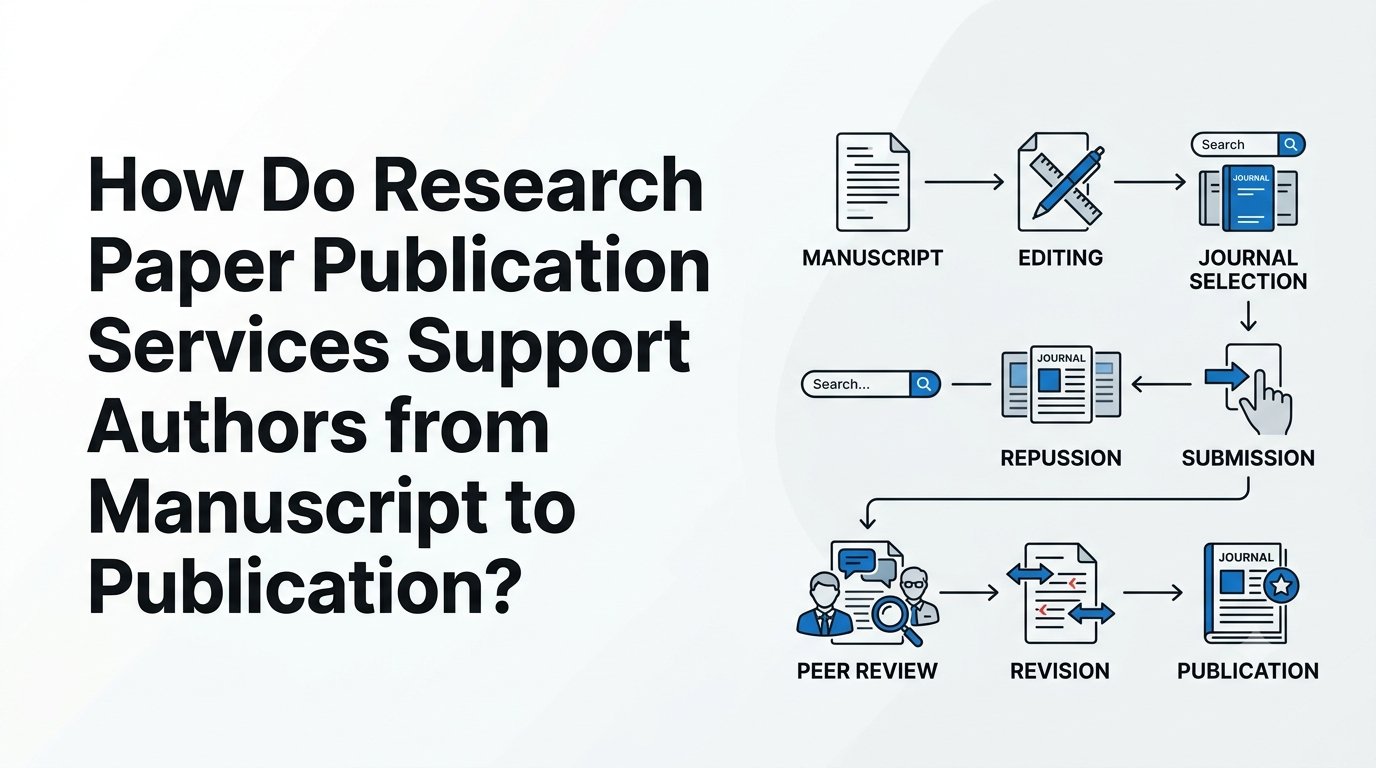
The typical path to a publication is:
It is also crucial to know that the creation of a research paper and publication assistance are not synonymous.
Research paper writing involves the development of the content of the study; publication support involves more on preparing the study for a specific journal and assisting the author in the publishing process.
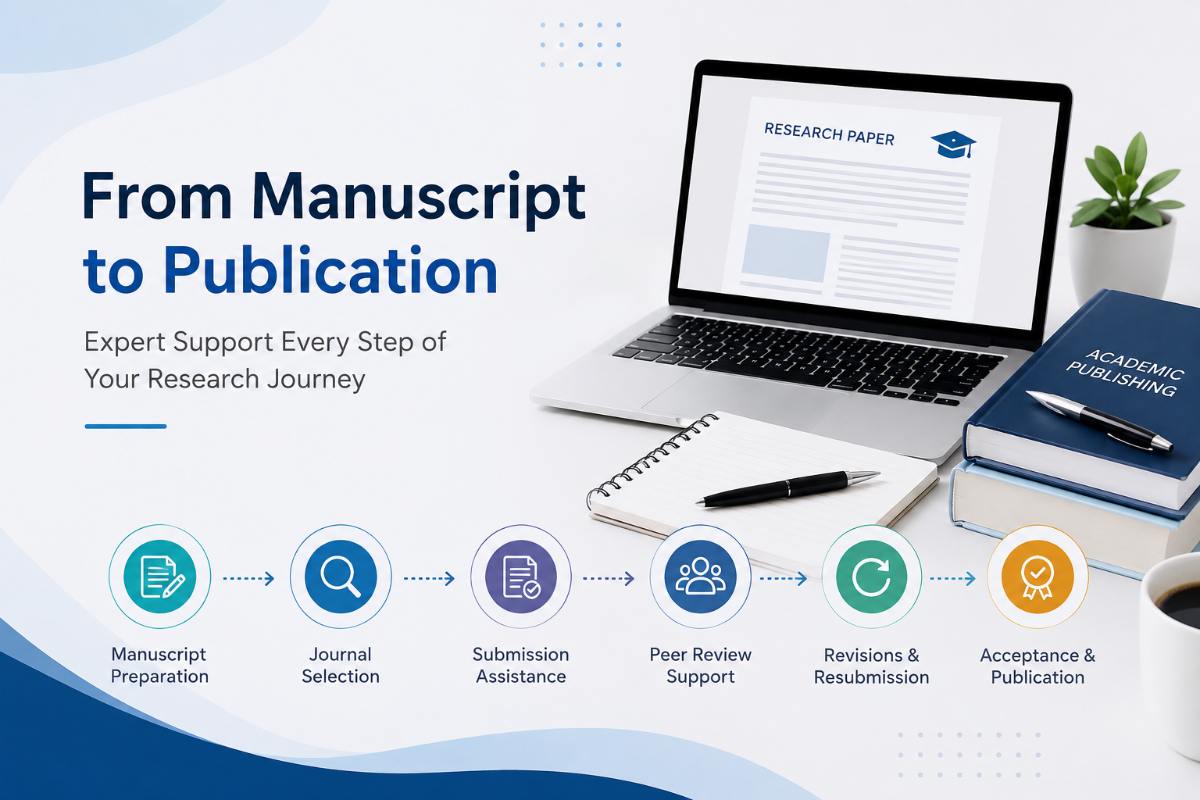
How Do Publication Services Support Authors?
1. Initial Manuscript Assessment
It's helpful to read a manuscript with an Editor's mind before submitting a paper. Support for publication may start with the assessment of the structure, clarity of the manuscript, research objective, method, results, discussion, references, tables, figures and overall presentation.
This first reading helps the author discover the gaps that he may not have seen after spending a considerable amount of time on the same manuscript.
Manuscript preparation services can also offer tips on the order and clarity of the manuscript prior to submission.
2. Editing and Manuscript Improvement
Correct grammar is not enough for a good manuscript. It must be logical and follow the research problem to the conclusion.
The professional editing can concentrate on:
- Academic language and sentence structure
- Logical flow between sections
- Abstract and introduction
- Discussion and interpretation
- Tables and figures
- References and citations
- Consistency in terminology
This kind of support would ease the understanding of the author's results by the editors and reviewers without altering the actual results of the research.
3. Pre-Submission Quality Check
Each journal will have its own individual needs. Some requirements for word count, references, figures and tables, abstracts, declarations, and supplementary files may apply to a manuscript.
A pre-submission check can aid authors to ensure that:
- The manuscript follows the journal's guidelines
- References use the required style
- Figures and tables are prepared correctly
- Ethical statements are included
- Funding and conflict-of-interest information is provided
- Required files are ready
- The manuscript meets basic formatting requirements
Such academic publishing assistance can alleviate unnecessary technical issues prior to submission.
4. Journal Selection and Matching
The first of the crucial choices in publishing is choosing a journal.
The type of journal the article goes into should be appropriate for the research topic, audience, article type and scope. Authors can be helped to assess:
- Aims and scope
- Subject area
- Target readership
- Article type
- Indexing requirements
- Publication model
- Author guidelines
- Publication charges
- Peer-review policies
Even a good paper might be desk rejected if it is sent to an inappropriate journal. So, rather than journal reputation, journal selection should be based on research fit.
5. Journal Formatting and Submission Preparation
After choosing the journal, the paper should be prepared in line with the instructions provided by the journal.
This can include:
- Reference formatting
- Heading structure
- Abstract format
- Figure and table requirements
- Word limits
- Author information
- Declarations
- Supplementary files
Manuscript submission services can help the authors prepare these materials properly and avoid the omission of important documents.
An 'Introduction to the Manuscript' in the form of a cover letter might also be composed to briefly explain the contribution of the manuscript and its relevance to the chosen journal.
6. Submission and Editorial Screening
Sending a manuscript can be more than just uploading a document. The authors will have to submit a few supporting files, author information, manuscript details, keywords, declarations etc. through the online submission system.
Journal submission service and research paper submission service can render technical support at this point.
Manuscripts submitted typically receive a preliminary edit before being sent for peer review.
At this point a paper could be rejected due to:
- Scope mismatch
- Poor presentation
- Missing documents
- Formatting problems
- Insufficient novelty
- Ethical or compliance concerns
A desk rejection doesn't necessarily indicate that the research itself is bad.
7. Peer Review and Reviewer Comments
The manuscript can be submitted to peer reviewers if it is passed by the editors. Reviewers can request changes to the methodology, analysis, literature review, discussion, references, figures, or conclusions.
The choice could be:
- Accept
- Minor revision
- Major revision
- Revise and resubmit
- Reject
Publication support services can assist authors to arrange the comments made by the reviewers and to comprehend what needs to be tackled.
The author must, however, retain the ultimate responsibility for dealing with the scientific issues.
How Is a Reviewer Response Prepared?
Typically the helpful response deals with every reviewer comment individually.
The author can:
- Read the comment carefully.
- Identify the requested change.
- Revise the relevant section.
- Explain the change clearly.
- Mention where the change was made.
- Provide a reasonable explanation if a suggested change cannot be made.
This helps keep the revision process more structured and demonstrates that the reviewers' input has been taken into account seriously.
8. Revision and Resubmission
It is an academic fact that revision is a process in the academic publishing. Changes can be made in a manuscript, and may be done once, and sometimes more, until the manuscript is accepted.
When a paper is rejected, the author should seek to understand the reasons behind the rejection. The manuscript might require significant improvement or it may not have been an appropriate journal.
Research publication services can help in reviewing the feedback received, modify the manuscript, reconsider the journal for submission and prepare a new draft if necessary.
The same manuscript should not be resubmitted to another journal without taking account of important issues raised in the previous review.
9. Support After Acceptance
It's a crucial stage of acceptance, but there may be a bit more work to be done before it gets published.
Authors must fill in:
- Final proofreading
- Author proof corrections
- Copyright or licensing forms
- Publication fee requirements, where applicable
- Final figure checks
- Metadata confirmation
A few journal publication companies still support authors at this latter stage.
After the article is published, it may receive a DOI and become available through the journal's online platform and relevant scholarly databases, depending on the journal.
Author Responsibility vs. Publication Support
Publication support does not replace the author's responsibility.
| Author's Responsibility | Service Provider's Support |
|---|---|
| Conduct the research | Improve manuscript presentation |
| Provide accurate data | Check structure and formatting |
| Confirm authorship | Assist with documentation |
| Make scientific decisions | Provide editorial guidance |
| Approve the final manuscript | Assist with submission |
| Address research concerns | Help organize reviewer responses |
A responsible provider should never fabricate data, manipulate findings, create false authorship, or guarantee acceptance.
The author's research, data, conclusions, and final decisions must remain under the author's control.
What Should Authors Look for in Publication Support?
Authors are advised to not settle for research paper publication services which guarantee an article will be published, as this is not always true.
Consider:
- Does the provider have experience in your research area?
- Does it offer editing or only formatting?
- Can it help with journal selection?
- Does it provide journal-specific formatting?
- Is reviewer-response support available?
- Are costs and timelines clearly explained?
- How is confidential research information handled?
- What happens if the manuscript is rejected?
- Does the author approve all major changes?
The publication process should be made clearer and not presented as a way to bypass peer review.
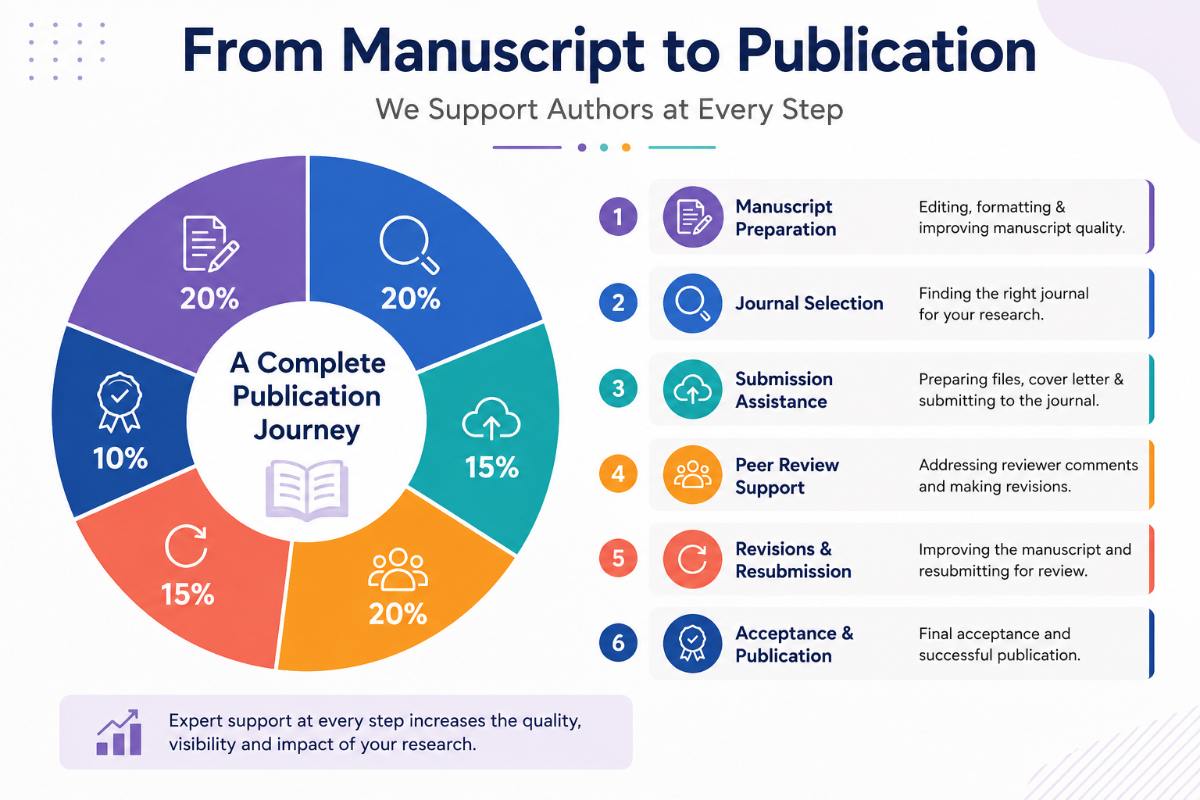
Research Paper Publication: A Simple Roadmap
It can be succinctly stated that the whole process is:
Different authors may need different levels of assistance. A first-time researcher may need help understanding journal requirements and reviewer comments, while an experienced researcher may only require editing, formatting, or submission assistance.
Then the right publication support services need to be sufficiently adaptable to assist the author when they need it.
Frequently Asked Questions
What do research paper publication services include?
These can encompass editing of the manuscript, selection of journals, formatting, preparation for submission, reviewer-response support, revision support and post-acceptance support.
Are academic publishing services the same as research paper writing services?
No, research paper writing is about creating the research manuscript while academic publishing services are about preparing and working with the manuscript through the journal publication process.
Can publication services help me select a journal?
Yes. They may consider the scope, subject area, target audience, type of article, author guidelines, indexing criteria and publication policies of journals to determine potential journals suitable for them.
Can a publication service guarantee acceptance?
No. Ethical, legitimate publication services cannot guarantee acceptance. Ultimately, the final decision is up to the editor of the journal and the peer reviewers.
What happens if my manuscript is rejected?
Authors should consider the comments of the editor and reviewers and revise accordingly if the comments are valid, reconsider suitability of the journal and, finally, decide on revise and resubmit or consider another appropriate journal.
Do manuscript submission services respond to reviewers?
Some will provide reviewer response and revision. Authors must, however, be accountable for the scientific choices and answers.
When should I use manuscript preparation services?
They might be helpful before submission when manuscript structure, language, formatting, references, figures, and overall readiness are in need.
Why is journal publication assistance useful for first-time authors?
First-time authors might not know what journal's rules and procedures are for submitting articles or what the reviewers or editor might say after reading it. These steps may be easier to understand and manage with the help of publication assistance.